Mohammadreza
Kavianpour
I build machine learning that stays reliable when deployment conditions violate training assumptions, sensor channels drop out, operating regimes shift, simulated signals diverge from measured ones, and target hardware is far smaller than the trained model. I work through graph representation learning, physics-informed modeling, domain adaptation, and model compression, and I validate on operating systems rather than benchmarks alone.
Mohammadreza Kavianpour
Ph.D. in Electrical Engineering
0
Citations
0
h-index
0
i10-index
0
Peer-Reviewed Papers
Metrics from Google Scholar
About Me
I am an AI Research Scientist with a Ph.D. in Electrical Engineering, focused on building robust machine learning models for complex, real-world systems. My work bridges rigorous research and practical deployment, across deep learning, graph neural networks, time-series modeling, and large language models.
My path began in electrical engineering, but the work truly came alive during my master's, when I designed and built a wireless data-acquisition system to diagnose machine faults, combining hardware, sensors, and machine learning end to end. That hands-on experience shaped how I approach problems: grounded in real data and measurable outcomes.
During my Ph.D., I advanced this direction with graph neural networks, physics-informed learning, and adversarial domain adaptation, targeting noisy, incomplete, and shifting data, resulting in papers in Measurement, Knowledge-Based Systems, and Neurocomputing. In parallel, I collaborated on deep learning for earthquake prediction, a three-paper line on which I was corresponding author.
I have since carried this focus into industry: a physics-constrained digital twin for fleet fuel optimization in maritime shipping, an accelerometer-based health-monitoring system for dairy cattle, and a retrieval-augmented assistant deployed inside a live legal and regulatory workflow. Alongside the papers, I release the code and data that sit underneath them. I am now seeking a postdoctoral position where I can apply this work to meaningful, interdisciplinary problems.
Research Interests
News & Updates
- ▹Two first-author review articles in preparation, on data-driven fuel models for ship routing and on decision-centric machine learning for dairy-cattle health events.
- ▹Released seven MIT-licensed Python packages for reproducible benchmark, maritime, and environmental data.
- ▹New paper published in Knowledge-Based Systems on knowledge distillation and subdomain adaptation.
- ▹New paper published in Measurement on physics-informed domain adaptation.
- ▹Our earthquake-prediction paper passed 220 citations.
Publications
First author on 10 of 16 publications · corresponding author on 12 · preprints of 4 journal articles available on arXiv.
Journal Papers
Knowledge Distillation and Enhanced Subdomain Adaptation Using Graph Convolutional Network for Resource-Constrained Fault Diagnosis
M. Kavianpour, P. Kavianpour, A. Ramezani, M. T. H. Beheshti
Knowledge-Based Systems, Elsevier, 2025
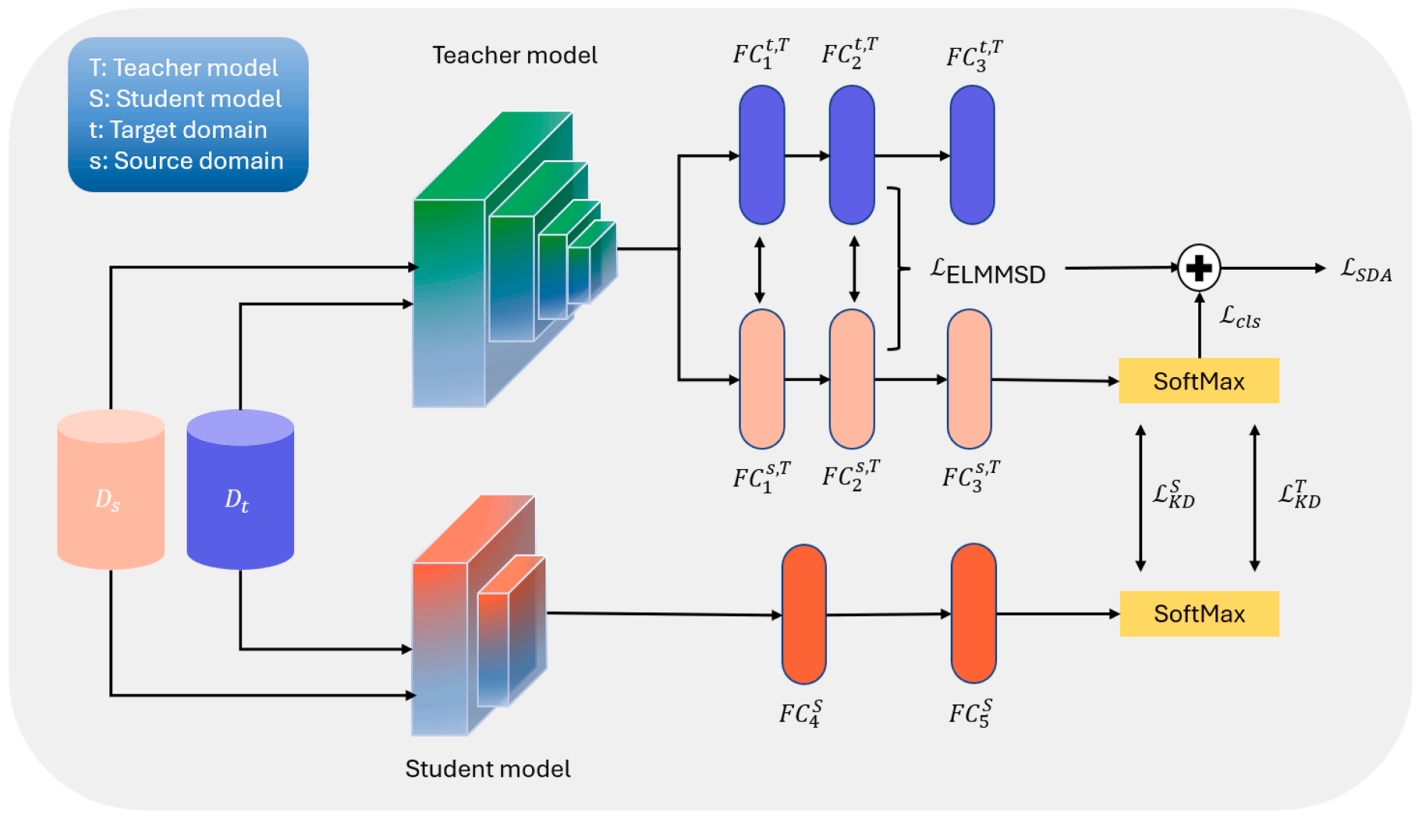
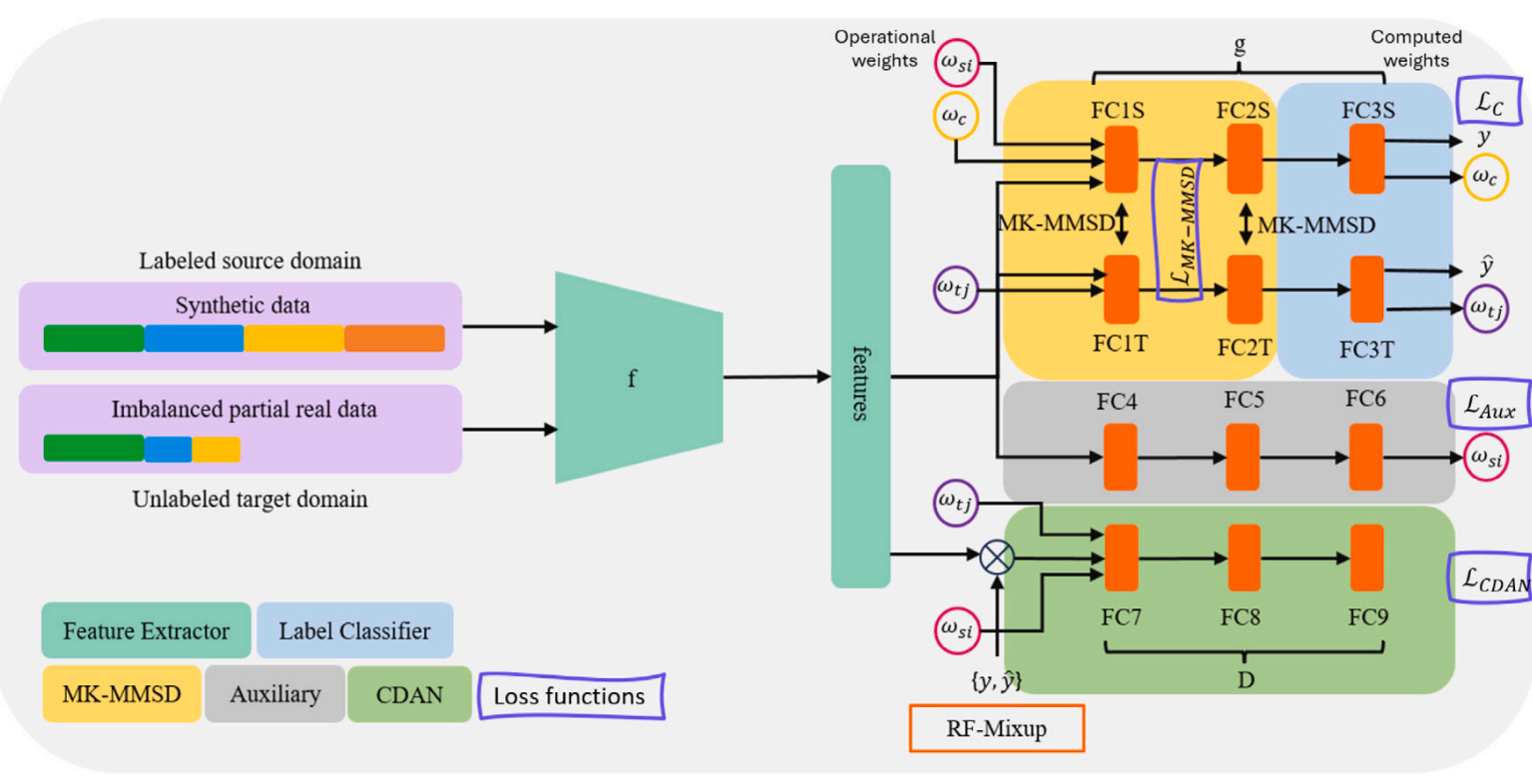
A Partial-Imbalance Robust Domain Adaptation Framework for Bearing Fault Diagnosis Using Physics-Informed Deep Learning
M. Kavianpour, P. Kavianpour, A. Ramezani, M. T. H. Beheshti
Measurement, Elsevier, 2025
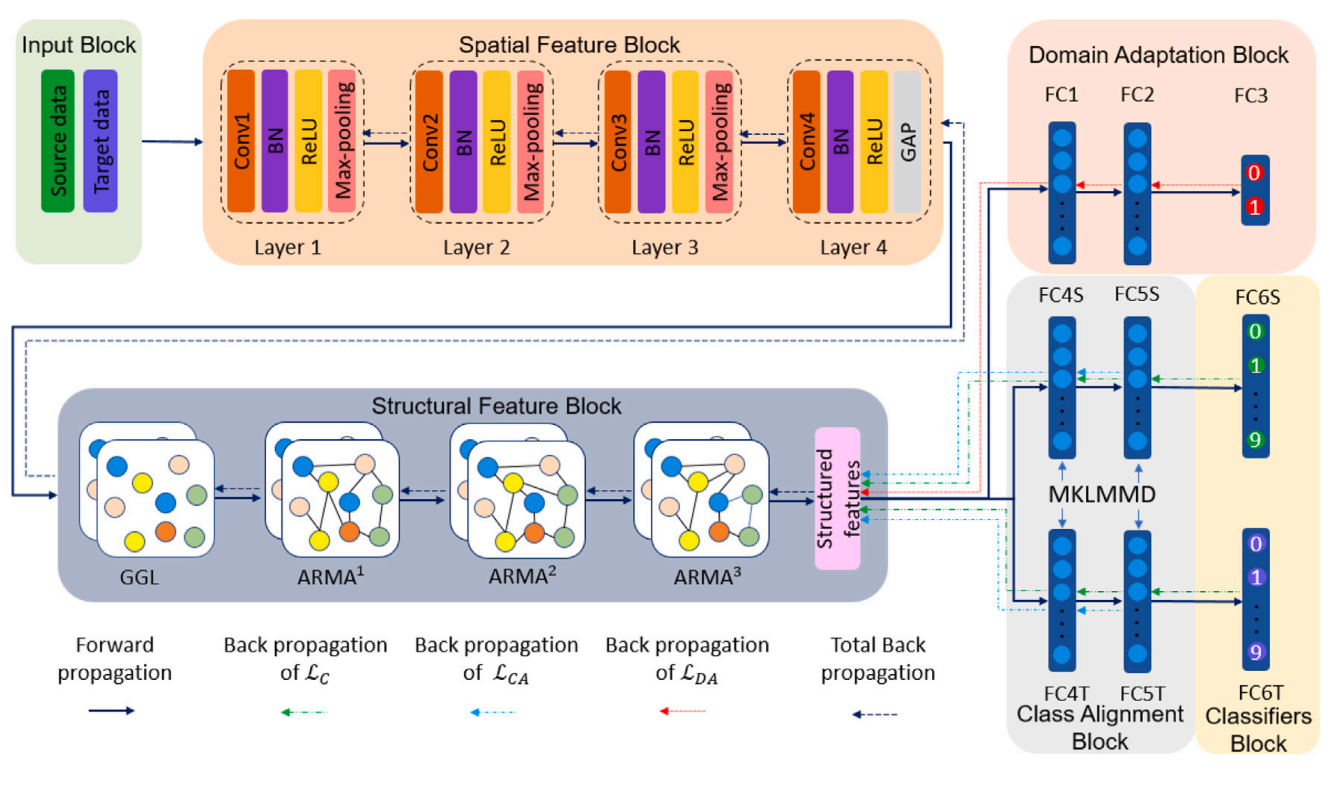
A Class Alignment Method Based on Graph Convolution Neural Network for Bearing Fault Diagnosis in the Presence of Missing Data and Changing Working Conditions
M. Kavianpour, A. Ramezani, M. T. H. Beheshti
Measurement, Elsevier, 2022
A CNN-BiLSTM Model with Attention Mechanism for Earthquake Prediction
P. Kavianpour, M. Kavianpour, E. Jahani, A. Ramezani
The Journal of Supercomputing, Springer, 2023
Spatial Graph Convolutional Neural Network via Structured Subdomain Adaptation and Domain Adversarial Learning for Bearing Fault Diagnosis
M. Ghorvei, M. Kavianpour, M. T. H. Beheshti, A. Ramezani
Neurocomputing, Elsevier, 2023
An Unsupervised Bearing Fault Diagnosis Based on Deep Subdomain Adaptation Under Noise and Variable Load Conditions
M. Ghorvei, M. Kavianpour, M. T. H. Beheshti, A. Ramezani
Measurement Science and Technology, IOPscience, 2021
Conference Papers
In Preparation
Learned Objectives, Uncertain Routes: A Critical Review of the Coupling Between Data-Driven Fuel Models and Ship Route Optimization
M. Kavianpour, et al.
In preparation for Ocean Engineering, Elsevier, 2026
From Wearable Signals to Actionable Alarms: A Decision-Centric Review of Machine Learning and Optimisation for Behaviour, Calving and Health-Event Detection in Dairy Cattle
M. Kavianpour, et al.
In preparation for Computers and Electronics in Agriculture, Elsevier, 2026
PA-KG: Physics-Verified Anchor Injection into Triplet Knowledge Graphs for Sim-to-Real Zero-Shot Compound Bearing Fault Diagnosis
M. Kavianpour, et al.
In preparation for Mechanical Systems and Signal Processing, Elsevier, 2026
Experience
Senior AI Research Scientist Current
Jun 2024 – PresentRaya Intelligent Process (Balam Logistics) · Tehran, Iran
Maritime AI and energy optimisation
- ▹Sole architect and developer, across an 18-month programme, of the company's first predictive analytics system for vessel fuel consumption and route optimization, fusing historical and real-time voyage, AIS, and meteorological data.
- ▹Introduced a physics-based correction layer that rejects physically infeasible operating points, and a graph-based formulation for fleet-level global optimization.
- ▹Evaluated on a controlled pilot across 10 vessels over 15 voyages, the system reduced fuel consumption by 6.5% and CO2 emissions by 7% relative to the prior operating baseline. Fleet-wide rollout across 50 vessels is scheduled for Q1 2027.
- ▹Designed and deployed a Retrieval-Augmented Generation (RAG) assistant over internal legal documents and shipping regulations, reducing routine enquiries to specialist departments by an estimated 30% (internal ticket-volume comparison over six months).
AI & Data Analytics Team Lead
Jul 2023 – Apr 2024Sarveen Technologies · Tehran, Iran
Precision livestock farming
- ▹Led a cross-functional team of veterinarians and data scientists building a calving-prediction and behavioural anomaly-detection system from neck-mounted accelerometers across 50 animals at 10-minute sampling, with a data-sufficiency rule tolerating up to 50% missing samples per window.
- ▹Benchmarked population-level static thresholds (detection probability 0.67 at a false-alarm rate of 0.10) against per-animal dynamic baselines (0.64 at 0.07), cutting false alarms by 30% at comparable sensitivity.
- ▹Independently engineered a smart parking-allocation system for two US universities (UC Davis & CSU Sacramento), assigning spaces by role and access permission with interactive map-based guidance.
Affiliated Researcher (part-time)
Jul 2023 – PresentControl & Intelligent Systems Lab, Tarbiat Modares University
- ▹Continued graph-based and physics-informed research alongside full-time industry roles; output includes two 2025 journal articles and two first-author review articles now in preparation.
Researcher & Laboratory Coordinator
Sep 2015 – Jul 2023Control & Intelligent Systems Lab, Tarbiat Modares University
- ▹Research on graph neural networks, physics-informed learning, and adversarial domain adaptation for missing data and distribution shift in dynamic systems.
- ▹Laboratory coordination (2016–2022): ran weekly research seminars, onboarded new graduate students, allocated shared computational resources, and coordinated cross-project dependencies for a group of 23 researchers.
- ▹Co-supervised five M.Sc. researchers across three research groups, resulting in co-authored peer-reviewed publications, including the group's three most-cited papers.
Research Collaborator (remote)
Sep 2019 – Feb 2022Seismology & Data Science Group, University of Mazandaran
- ▹Inter-institutional collaboration on deep learning for earthquake magnitude prediction and spatio-temporal forecasting; produced two co-authored publications, including the group's most-cited paper.
Selected Projects
Conversational AI (LLM & RAG)
Designed and deployed conversational assistants using large language models and Retrieval-Augmented Generation to surface knowledge from internal documents and improve user experience.
Physics-Constrained Digital Twin for Fleet Fuel Optimization
A per-vessel behavioural model driven by live voyage, AIS, and meteorological data, with a physics-based correction layer that rejects infeasible operating points and a graph-based fleet optimizer. Controlled pilot across 10 vessels over 15 voyages: 6.5% less fuel and 7% less CO2 than the prior operating baseline.
Livestock Health & Calving Prediction
Behavioural anomaly detection from neck-mounted accelerometers across 50 animals, tolerant to 50% missing samples per window. Per-animal dynamic baselines cut false alarms by 30% against population thresholds at comparable detection sensitivity.
Smart Parking Allocation
Sole engineer on a space-allocation system delivered for two US universities (UC Davis and CSU Sacramento), assigning parking by role and access permission with an interactive guidance map.
Earthquake Prediction & Magnitude Classification
Corresponding author on a three-paper line applying deep learning to non-stationary seismic time series for magnitude and frequency prediction, with 256 citations across the line and 220 on the lead paper.
Fault Diagnosis under Missing Data & Domain Shift
Graph convolutional models with class alignment and subdomain adaptation for bearing and gearbox diagnosis when sensor channels drop out and operating conditions change, plus a physics-informed framework that handles partial-set label mismatch, class imbalance, and the gap between simulated and real fault data in one architecture.
Model Compression for Resource-Constrained Diagnosis
Progressive knowledge distillation from a graph convolutional teacher to a compact student, with an enhanced subdomain-alignment objective. Over 90% compression with under 0.5% accuracy loss, benchmarked against quantisation.
Fine-Tuning LLMs for Specific Tasks
Fine-tuned models such as LLaMA for sentiment analysis and FLAN-T5 for summarization using PEFT/LoRA to achieve strong task performance at low computational cost.
Open Source
Every one of my eleven published papers ships with a public repository — six code releases and five data and documentation releases — and four journal articles have arXiv preprints. Alongside those, I maintain seven MIT-licensed Python packages that make the data underneath the work reproducible.
Machine Health & Seismic Data
Four MIT-licensed Python packages standardising acquisition, integrity checking, and leakage-aware splitting for the benchmark datasets underlying all of my peer-reviewed publications.
Maritime & Environmental Data
Three MIT-licensed packages for reproducible geospatial and reanalysis data extraction, with checksums and source provenance: a queryable SQLite port index built from UN/LOCODE, the NGA World Port Index and OpenStreetMap anchorages, and preset-driven, locally validated request tooling for Copernicus Marine and ECMWF ERA5 with unit conversion and provenance manifests.
Education
Ph.D. in Electrical Engineering — Control
Sep 2018 – Jul 2023Tarbiat Modares University · GPA 4.00/4.00 (First-Rank Graduate)
Thesis: Bearing Fault Diagnosis Using Advanced Deep Learning Methods in the Presence of Missing Data. Addressed key real-world challenges in fault diagnosis — physics-informed generated data, noise interference, missing data, distribution discrepancy, and the scarcity of labeled data — using advanced graph neural networks and adversarial domain adaptation. Supervised by Dr. Amin Ramezani.
M.Sc. in Electrical Engineering — Control
Sep 2015 – Jun 2018Tarbiat Modares University · GPA 3.77/4.00
Thesis: Design and Implementation of an Arduino-Based Wireless Fault Diagnosis System for Electric Pumps Using Machine Learning. Designed and built an online, wireless data-acquisition system with multiple sensors and Arduino. Simulated and introduced fault scenarios — impeller, bearing, and rotor faults — and applied feature extraction and machine learning for precise, reliable diagnosis. Supervised by Dr. Mohammad T. H. Beheshti.
B.Sc. in Electrical Engineering — Telecommunications
Sep 2010 – Feb 2015Shahid Beheshti University
Thesis: Analysis and Design of High-Frequency and High-Temperature Oscillators.
Technical Skills
Generative AI & NLP
Deep & Machine Learning
Languages & Frameworks
Web, Data & DevOps
Signal & Time-Series
Hybrid Physics-ML & Optimization
Awards & Professional Service
Awards & Honors
- ▹First rank in the Ph.D. program with the highest GPA among all graduates.
- ▹Outstanding Teaching Assistant in the Control Department for 2019, 2020, and 2021.
- ▹Full scholarships for all degrees (B.Sc., M.Sc., Ph.D.) by ranking in the top 1% of national entrance exams.
Reviewer Service
2022 – present · 70+ manuscripts reviewed for 11 journals:
- IEEE Transactions on Industrial Informatics
- IEEE Transactions on Industrial Electronics
- IEEE Transactions on Instrumentation and Measurement
- Mechanical Systems and Signal Processing
- Reliability Engineering & System Safety
- Expert Systems with Applications
- Pattern Recognition
- Neurocomputing
- Information Sciences
- Applied Soft Computing
- Journal of Industrial Information Integration
Teaching & Mentoring
- ▹Teaching Assistant (2016–2022): 17 course-sections across five graduate courses, including parallel on-campus and distance-learning cohorts — Modern Control Theory, Optimal Control, Multivariable Control Systems, Adaptive Control, and Fault Diagnosis Systems.
- ▹Co-supervised five M.Sc. researchers across three research groups, producing co-authored publications.
- ▹Software Instructor, IEEE Iran Section (2018–2020): MATLAB & Python.
- ▹Course Instructor, Faradars (2017): Multivariable Control, 1,200+ enrolled learners.
- ▹Oral presentations: ICSPIS 2021, ICSPIS 2022, ICCIA 2022 (IEEE).
Get in Touch
I'm open to postdoctoral and research opportunities in applied AI and machine learning. Feel free to reach out — I'd be glad to connect.
I'm open to postdoctoral and research opportunities in applied AI and machine learning. Feel free to reach out — I'd be glad to connect.
kavianpour.tmu@gmail.com